Menu
Menu
Menu
Menu
AI and Risk Management: Why the Human Factor Still Decides
- February 15, 2026
- AI is a powerful tool – but risks arise where humans and AI are not thought through together. Anyone who focuses only on new technology and ignores the human factor misses what matters most.
- The biggest risk factor with AI is often the user. Uncritical use, lack of training, and feeding sensitive data into AI systems lead to misinformation, privacy violations, and threats to intellectual property.
- Review processes first, then digitize. A digitized bad process is still a bad process – expensive to implement with AI, with no real added value. Before you deploy AI: Does my company even need this process, and in this form?
- AI is one topic among many. Supply chains, people management, critical infrastructure (power, internet, water), IT failure – all of this stays relevant. Risk analysis should remain holistic and not focus solely on AI.
- People shape the change. AI changes work; but who defines the steps, evaluates processes, and takes responsibility is still the human. Teams that think ahead are the difference between blind tech adoption and real benefit.
- Concrete steps: Analyze how deeply AI is relevant to your business model. Training and clear usage rules for AI. Keep sensitive data out of external AI systems (e.g. US-hosted). Prioritize processes – only what truly creates value is worth automating.
AI and Risk Management: Why the Human Factor Still Decides
- February 15, 2026
- AI is a powerful tool – but risks arise where humans and AI are not thought through together. Anyone who focuses only on new technology and ignores the human factor misses what matters most.
- The biggest risk factor with AI is often the user. Uncritical use, lack of training, and feeding sensitive data into AI systems lead to misinformation, privacy violations, and threats to intellectual property.
- Review processes first, then digitize. A digitized bad process is still a bad process – expensive to implement with AI, with no real added value. Before you deploy AI: Does my company even need this process, and in this form?
- AI is one topic among many. Supply chains, people management, critical infrastructure (power, internet, water), IT failure – all of this stays relevant. Risk analysis should remain holistic and not focus solely on AI.
- People shape the change. AI changes work; but who defines the steps, evaluates processes, and takes responsibility is still the human. Teams that think ahead are the difference between blind tech adoption and real benefit.
- Concrete steps: Analyze how deeply AI is relevant to your business model. Training and clear usage rules for AI. Keep sensitive data out of external AI systems (e.g. US-hosted). Prioritize processes – only what truly creates value is worth automating.
Why Talk About AI and Risk Now?
In daily life and in business we use AI more and more: for text, images, processes, analytics. At the same time, the attitude often is: “The internet was like that too – maybe I don’t need it.” With AI, that’s risky. It won’t just go away. The question is no longer whether we use it, but how – and what risks we take in the process.
For entrepreneurs, founders, and SMEs that means: AI can speed up processes, cut costs, and make work easier. It can also change jobs, fuel wrong decisions, and cause legal or reputational damage. Anyone who deploys AI without keeping people and the full risk picture in view is acting recklessly.
The Human at the Center – Even with AI
In companies it’s not only about technology. It’s about people: they shape, run, and change the organization. AI and robotics can take over repetitive or physically demanding work – and already do, from production to administration. That relieves pressure but can also trigger fear: Will my job still be needed?
The reality is more nuanced. AI is a tool. Like a power drill, it handles certain tasks faster and more consistently – but someone still has to know what the tool is for and what should come out in the end. What AI (still) doesn’t do: take responsibility, deal with consequences, decide situationally, think creatively and “outside the box.” That’s exactly why you need people and leadership who think ahead. Anyone who only automates and removes humans from the process loses those strengths.
Where the Biggest AI Risks Lie
Three areas are especially relevant:
1. The user as a risk factor. In most cases the risk doesn’t come from AI itself but from who uses it, how, and for which processes. Anyone who accepts AI outputs without checking, has no grasp of the subject, or has no clear usage rules increases the chance of wrong decisions and misinformation – in business and in private life, especially with young people and untrained use.
2. Data protection and privacy. Processing sensitive data on customers, employees, or processes in AI tools hosted e.g. in the US can quickly lead to violations. The consequences can be costly and damaging to reputation. Before data flows into AI systems: check hosting, contracts, and purpose carefully.
3. Intellectual property and reputation. AI can imitate voices, images, and text in a very convincing way. That opens the door to abuse – from deepfakes to copying brands and identities. Creators, brands, and public figures in particular need to think about how to protect their IP and identity.
At the same time: AI is one important topic, but not the only one. Supply chains, people management, critical infrastructure (power, internet, water), IT failure, or location risks can be the bigger drivers for a given company. Risk management stays holistic – and acknowledges that the human is the link between all these themes.
Think Through Processes First – Then Deploy AI
A widely shared saying sums it up: If you digitize a bad process, you still have a bad process. Anyone who simply “adds AI on top” without asking whether the process makes sense or should be eliminated wastes money and may create more risk than before.
For founders and SMEs that means: AI can greatly speed up the start and day-to-day operations – from content creation and video editing to website and pricing. That should be used. But only for processes that really serve the company and that you or your team can still steer and understand. Introducing too many AI tools without someone who operates them and interprets the results trades one problem for another. And: bad inputs don’t become good outputs with AI. The quality of ideas and processes remains decisive.
In practice: Analyze how deeply AI is relevant to your business model. Involve people – they should shape the change, not just endure it. Review processes before digitizing. And keep the big picture in mind: which risks (not just AI) matter most for you and your company?
Three Sentences to Take Away
All the security systems in the world are useless if humans undermine them. An automated high-bay warehouse:
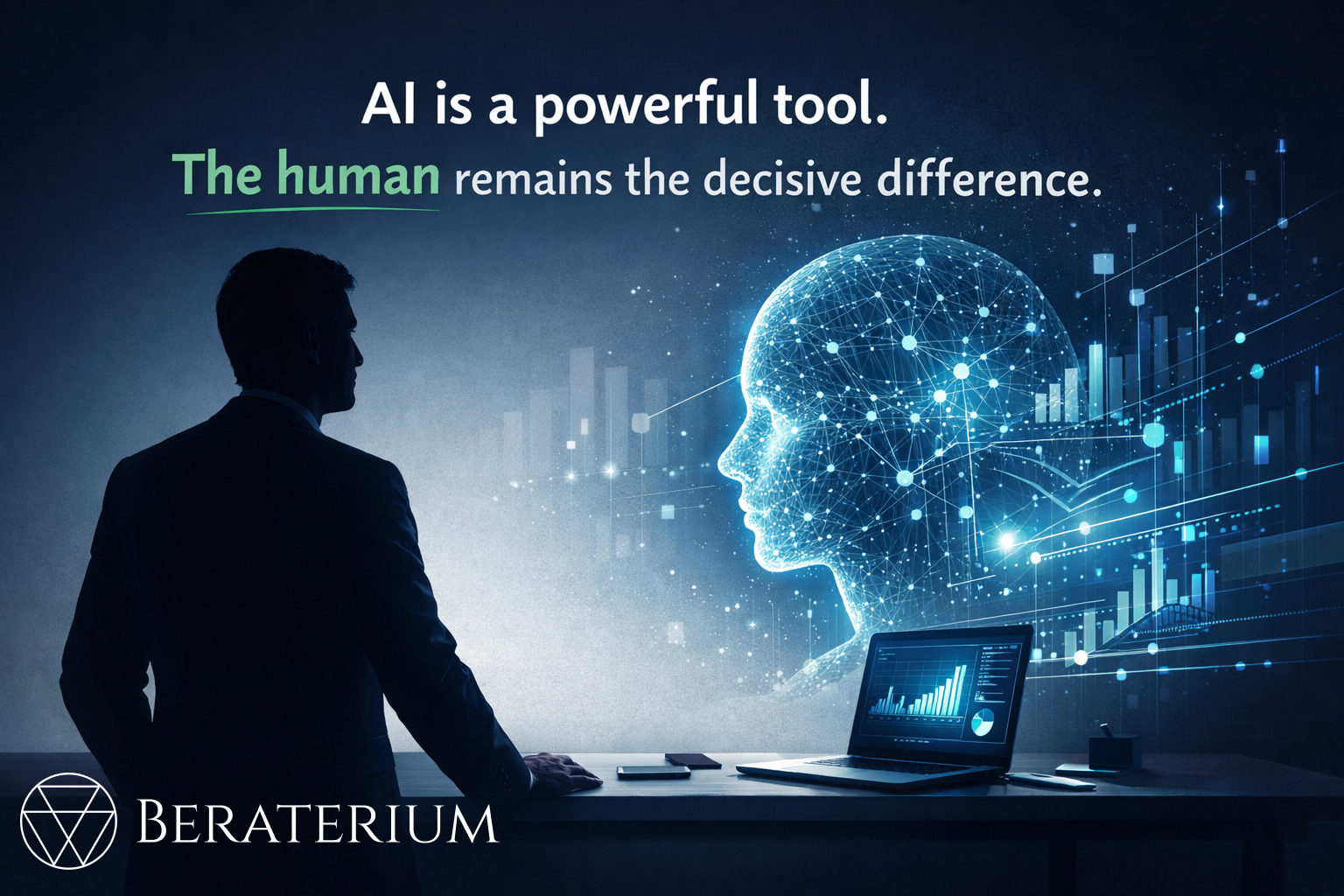
– AI is a powerful tool.
– The human is and remains the decisive difference.
– Risks arise where both are not thought through together.
Risk management doesn’t mean dramatizing every risk. It means separating what matters and starting with what really affects your company and your situation – in a pragmatic, dialogue-based way, with the human at the center.
10 car bodies scrapped during testing because the technology failed or employees operated it incorrectly.
The reality: 40-50% of all cyber attacks result from human error – the click on the phishing email, the weak password, the USB stick.
Solution: Build security culture. This doesn’t mean control, but integration. Form working groups, let employees co-design security standards. Training must be practical, interactive, and experiential. Collect feedback, identify gaps, continuously adapt. And most importantly: Start at the top – when management demonstrates security, it transfers to everyone.