Between Routine and Risk - Why Focus and Communication Define the Future of SMEs
- November 4, 2025
The SME sector is the backbone of the economy – yet many companies are stuck between routine and risk. Daily firefighting replaces strategy, while outdated structures and weak communication hinder growth. This article explains how focus, transparent communication, and practical risk management can restore clarity, stability, and confidence in the future.
Between Routine and Risk - Why Focus and Communication Define the Future of SMEs
- November 4, 2025
The SME sector is the backbone of the economy, yet many companies are stuck between routine and risk. Daily firefighting replaces strategy, while outdated structures and weak communication hinder growth. This article explains how focus, transparent communication, and practical risk management can restore clarity, stability, and confidence in the future.
Small and medium-sized enterprises are often described as the backbone of the economy, reliable, down-to-earth, and highly productive. Yet behind this stability lies a paradox: while orders increase and responsibilities grow, there is less and less time for strategy, structure, and future planning. Day-to-day operations turn into constant firefighting and what once worked seamlessly begins to reach its limits.
This article highlights the patterns that hold many SMEs back and how focus, open communication, and pragmatic risk management can help regain clarity and control.
Reaction Instead of Strategy - When Everyday Business Takes Over
Many owners and managing directors find themselves in a loop of constant problem-solving: delivery delays, staff shortages, technical malfunctions, urgent customer requests. There’s little time left for strategic thinking.
This “firefighting mode” keeps the business running in the short term, but it prevents long-term progress. Decisions are made reactively, not strategically. Projects lose momentum, and the feeling of being “always behind” becomes the new normal.
To move forward, companies need a shift in perspective, from reacting to shaping. Regular reflection sessions, whether in internal workshops or with external advisors, create the space to step out of operational routines and focus on long-term direction.
Lack of Focus - How Overload Destroys Productivity
The more tasks are handled at once, the less impact they have. In many SMEs, everything seems urgent and equally important.
The result: overworked teams, declining motivation, and a drop in quality. Things become especially critical when daily chaos replaces strategic foresight, in areas like HR planning, investments, or compliance with new regulations.
Focus means consciously deciding what comes first and what can wait. Companies that regularly review processes, define responsibilities clearly, and delegate effectively not only gain efficiency but also peace of mind. Structure is not a limitation, it’s the foundation of stability.
Outdated Beliefs - When Experience Turns into a Barrier
“I don’t have time for that,” “We’ve always done it this way,” or “That won’t work here.” Such phrases are common in the SME world – and often dangerous. They keep businesses from evolving.
Many companies cling to proven processes even when markets, technologies, and customer expectations have long changed. Hidden routines often increase risk: missing documentation, unclear responsibilities, or neglected maintenance.
True progress begins with the willingness to challenge old patterns. Regular risk and process analyses reveal where effort is wasted without impact and where small adjustments can make a big difference.
Accepting Residual Risk - Perfection Is Not the Goal
No business can eliminate all risks. The key is to identify the most critical threats and address them in a meaningful order.
Structured risk management helps make these priorities visible: Which issues truly endanger the business – financially, operationally, or legally? Where is the potential loss high, even if the likelihood seems low?
Pragmatic risk work is not bureaucracy, it’s a decision-making tool. It shows where prevention pays off and where an accepted level of residual risk is simply part of realistic business life.
Communication as a Safety Factor - Sharing Knowledge, Not Shifting Responsibility
In many SMEs, essential knowledge sits with just a few people. If they are absent or overloaded, operations slow down or stop entirely.
Transparent communication and clear responsibilities are therefore key risk controls. Regular team meetings, shared performance data, and an open feedback culture help identify issues early and build solutions collaboratively.
Especially in family-owned and owner-led companies, learning to delegate and trust others can be a turning point. Teams that are empowered to take responsibility act more proactively and support the company’s goals instead of waiting for instructions.
Three Steps to Greater Clarity and Calm
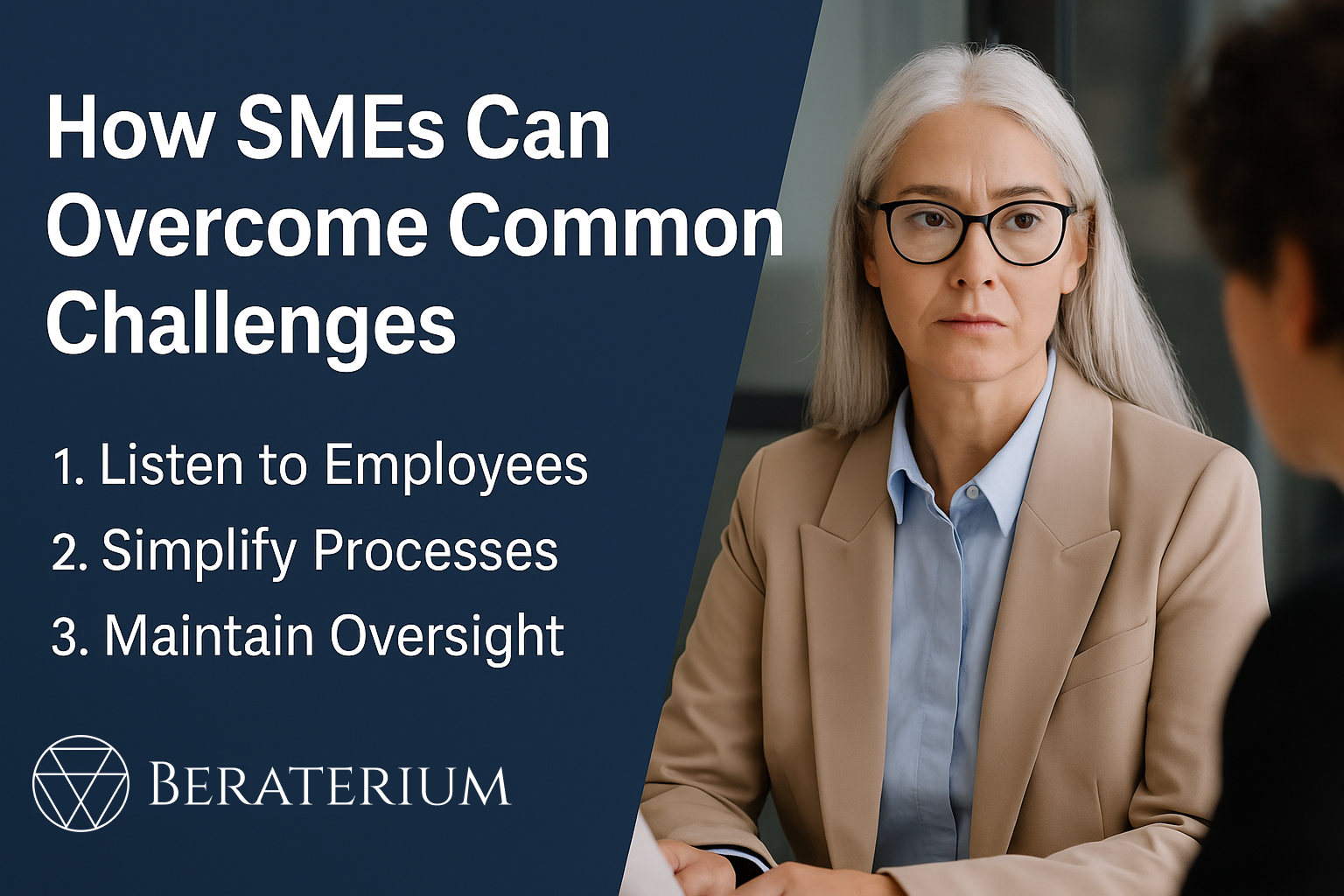
1. Take employees seriously – knowledge doesn’t only exist at the top.
Those who work in the business every day usually know its weak spots best. Production staff notice irregularities before they cause downtime, and office employees see where processes slow down. These perspectives are invaluable – if they are actively heard.
Regular discussions, feedback rounds, or short weekly meetings help detect problems early and distribute responsibility. When employees feel their input is valued, the quality of their insights increases – along with their identification with the company. Trust doesn’t grow from instructions, but from genuine listening.
2. Simplify processes – complexity is not a sign of professionalism.
Many SMEs struggle with grown structures: multiple systems, unclear workflows, missing documentation. It costs time and creates frustration.
The first step toward clarity is to make processes visible – for example, through a simple overview of all core workflows from order intake to delivery. Then comes the key question: “What is truly necessary?” Often, tasks can be combined or streamlined digitally. Short checklists, clear responsibilities, and transparent routines improve efficiency and prevent important steps from being lost in daily operations.
Process clarity is not a goal in itself – it gives employees confidence and the company speed.
3. Keep an overview – make risks visible before they emerge.
Risk management doesn’t need to be a thick binder on a shelf. Even a simple overview of potential risks and bottlenecks can make a decisive difference: Where would losses occur if a system failed, a supplier dropped out, or an employee was absent for an extended period?
A regular risk workshop – internal or externally moderated – helps identify, prioritize, and address these issues. The key is not to let the results gather dust, but to update them regularly.
Those who make risks transparent gain not only security but also freedom of action: investments become more targeted, responsibilities clearer, and even in times of crisis, the company remains capable of acting.
Conclusion: The Future Demands Clarity
The strength of the SME sector lies in its dedication, experience, and close relationships. Yet these same strengths can become vulnerabilities when communication stalls and structures erode.
Those who make risks visible gain not control, but freedom. And those who openly address challenges create the foundation for sustainable growth – not through constant crisis management, but with clear direction and confidence.